Inpatients
We provide care for patients admitted with a range of community-acquired and healthcare-associated infections, including influenza, tuberculosis, melioidosis and severe dengue, along with other bacterial and viral infections. We manage HIV patients across various stages, from those with late-stage AIDS to well-controlled individuals. All adult general medical patients requiring isolation are managed in our 21-bed negative pressure isolation ward.
Our two consultation teams work closely with other clinical services in the hospital to treat patients with complex infections. This includes patients in various medical and surgical disciplines, as well as those in liver, kidney and bone marrow transplant units, haematology/oncology and critical care units.
Outpatients
Patients referred to our ID specialists are typically seen within a week at the 13b Medicine Clinic in the NUH Medical Centre. In addition, we provide care through various subspecialty clinics, including:
Outpatient Parenteral Antibiotic Therapy (OPAT)
Established in 2004, OPAT, predominantly nurse-led, handles over 300 new cases annually, providing outpatient antibiotic infusions in the clinic or at home, often via a self-administration system. OPAT manages infections requiring long-term antibiotics and oversees vascular access devices during treatments. We offer comprehensive education to patients and families on managing vascular access devices, antibiotic side effects and infusor pumps.
Home caregivers are trained to administer intravenous antibiotics using an elastomeric pump, with training available during hospitalisation. Patient education materials (PICC and Infusor) are provided for reference. A 24-hour emergency support hotline is available for patients/caregivers.
The NUH OPAT Programme, subject to 14 peer-reviewed publications and numerous conference presentations, has also hosted healthcare professionals from Singapore and internationally.
With most patients needing less than 30 minutes door-to-door time, the programme has a readmission rate of just 2%. In 2016, an international OPAT network was established, with over 200 practitioners across 23 countries.
For more information on OPAT, please click here.
Dengue Outpatient Management (DOM)
The DOM clinic safely manages dengue patients who meet specific criteria without hospital admission, preventing over 500 admissions every year. Services in the DOM clinic include daily monitoring of patients’ conditions, patient education on managing dengue and daily updates on full blood count results.
For more information on DOM, please click here.
Travellers' Health and Vaccination Clinic
Established in 2002, the NUH Travellers’ Health and Vaccination Clinic (THVC) provides comprehensive pre- and post-travel health counselling, immunisations and medications for overseas travel.
The clinic advises on travel-related infection risks and diseases, and caters to travellers with special needs, including pregnant women, the elderly and immunocompromised individuals. A broad range of travel immunisations and medications, including those for malaria prevention and treatment of travel-associated diarrhoea, are available.
Returning travellers can also access consultations and screening tests tailored to their exposure history and symptoms.
Beyond travel-related services, the clinic provides routine childhood vaccinations and immunisations for those with immunocompromised conditions or high-risk occupations. Group bookings are welcome, including families, corporate travellers, and school excursion groups.
Types of Vaccinations available:
- Hepatitis A
- Hepatitis B
- Hepatitis A and Hepatitis B combined vaccine
- Influenza
- Japanese Encephalitis
- Malaria prophylaxis options: Malarone, Doxycycline, Mefloquine
- Measles, Mumps, Rubella (MMR)
- Meningococcal ACWY-135
- Meningococcal B (Trumenba)
- Pneumococcal conjugate (PCV13) and polysaccharide (PPSV23)
- Polio
- Rabies
- Tetanus, diphtheria, and acellular pertussis (Tdap)
- Tick-borne Encephalitis
- Typhoid
- Varicella (Chickenpox)
- Yellow Fever
For more information on NUH THVC, please click
here.
Antimicrobial Stewardship Programme
Initiated in July 2009 as a collaborative project between the Department of Pharmacy and the Division of Infectious Diseases, the Antibiotic Stewardship Programme (ASP) is funded by the Ministry of Health. The programme has expanded to include three full-time pharmacists and three ID consultants and now covers all wards outside of the intensive care units.
ASP focuses on auditing the use of broad-spectrum antimicrobials to reduce inappropriate usage.
The ASP team, consisting of doctors and pharmacists, reviews prescriptions of broad-spectrum antimicrobial agents at specific intervals. The primary goals are to curb the emergence of resistant organisms within the hospital, reduce inappropriate antibiotic usage and minimise adverse effects experienced by patients.
HIV Programme
Established in 2010, the NUH HIV Programme, also known as the Multidisciplinary Infectious Diseases (MID) Programme, aims to better address the needs of Persons Living with HIV/AIDS (PLHIV) at NUH. The programme encompasses inpatient and outpatient clinical care, education and training for healthcare workers, PLHIV and the community, operational and clinical research, community support and advocacy.
Since its inception, the programme has cared for over 450 PLHIV and trained more than 1,000 healthcare workers through initiatives like the Red Ribbon Ambassadors Programme, the Healthcare Worker HIV Education Series, and the Asia Pacific HIV Practice Course (APHPC).
The first APHPC was conducted in November 2016. This four-day course, designed to enhance the knowledge and skills of healthcare workers in the HIV sector across Asia Pacific, was repeated in 2017 and was well received by participants from all countries. It will continue regularly in Singapore and in the Region.
For more information on the HIV programme, please click here.
Be Prepared (BePrEP) Clinic
Launched in October 2016, the BePrEP Clinic offers confidential and holistic services specialising in Sexually Transmitted Infections (STIs) and HIV prevention. Led by Dr Dariusz Olszyna, a Senior Consultant at the Division of Infectious Diseases with over 10 years of experience in HIV and infectious diseases, the Clinic provides counselling and testing for STIs and HIV, as well as risk-reduction packages including Post Exposure Prophylaxis (PEP) and Pre Exposure Prophylaxis (PrEP).
Why Is Sexual Health Important?
Regular testing for STIs, including HIV, is vital for personal and partner health.
Early treatment can reduce infection severity and improve overall health outcomes
Consulting with healthcare professionals about sexual health can help in protecting oneself and partners effectively
Services offered:
- STI and HIV-risk assessments
- STI risk-reduction counselling
- STI and HIV screening
- STI treatment
- Vaccinations
- Comprehensive HIV risk-reduction package including PrEP
- Direct linkage to HIV care (NUH Multi-Disciplinary Infectious Diseases Clinic) for patients testing positive for HIV
- PEP service
- HelpLine for support
Why visit the BePrEP Clinic?
- Concerns or questions about sexual health
- Consideration of PrEP
- Need for STI treatment
- Symptoms of STIs or HIV
- Exposure to an STI or HIV
- Seeking safer sex advice or counselling
- Discussing protection from STIs and HIV
For more information about STIs, please visit: NHS
For more information about HIV, please visit:
Centers for Disease Control and Prevention
HIV Programme
HIV Programme
Infection Prevention and Control (IPC)
Established in 2015 from the merger of the Epidemiology and Infection Control teams, the IPC team plays a key role in ensuring the safety of both NUH patients and staff. Since the SARS outbreak in 2003, the team has been focused on managing the threat of emerging pathogens (such as Ebola and MERS) in the region. The team is skilled in managing outbreaks and threats at the hospital level and has developed internationally recognised best practices for infection control training. The team members have contributed to infection prevention activities and trainings locally, in various Asian countries, the Middle East and West Africa. Through numerous interventions, we have seen improved hand hygiene compliance and reduced MRSA colonisation and infection rates throughout the hospital. We continue to publish on various infection prevention successes.
Infectious Disease Community Pilot Programme (IDCP)
Initiated in 2015, the IDCP Programme aims to build the capacity of the regional health system, encompassing non-acute hospitals, nursing homes and family medical centres in Western Singapore. Motivated by Singapore’s ageing population and the rise in patients with multi-drug resistant organisms needing ongoing community care, the programme seeks to develop an integrated care model. This model supports, empowers and builds the capacity of community healthcare providers, aiming to improve patient care, reduce healthcare systems costs and lessen the burden on both the hospital system and the patients.
Immunocompromised Hosts Programme
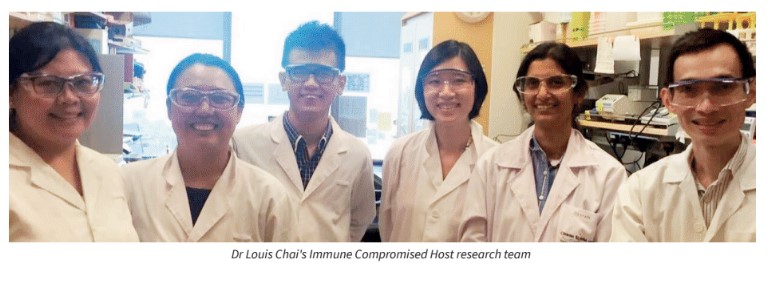
The Immunocompromised Hosts Programme plays a central role in the care of patients undergoing solid organ transplantation and haematopoietic stem cell transplantation, as well as haematology-oncology patients receiving chemotherapy and other immunosuppressed patients treated with biologic therapy, complement inhibitors, or advanced immunotherapies such as CAR T-cell therapy and bispecific T-cell engagers.
Our outpatient services include:
NUCOT Clinic
- Pre-transplant screening and risk assessment for prospective transplant recipients, including people living with HIV, and living donors
- Management of complex infections in pre- and post-transplant recipients, including mycobacterial infections, multidrug-resistant organisms, CMV disease, and invasive fungal infections
Immunocompromised Hosts Infectious Diseases (ICH ID) Clinic
- Prevention and management of opportunistic infections in haematology-oncology patients and other immunosuppressed hosts receiving chemotherapy, imunotherapy, biologics, or complement inhibitors
- Management of pulmonary and extrapulmonary non-tuberculosis mycobacterial infections
- Management of infections in pregnancy
- Management of tropical infections and complex general infectious diseases
Traveller's Health and Vaccination Clinic
- Vaccination, prophylaxis, and risk-reduction counselling for immunosuppressed patients, including individuals with asplenia, post-haematopoietic stem cell transplant recipients, and patients receiving complement inhibitors or immunotherapies such as CAR T-cell therapy or bispecific T-cell engagers
- Travel advice for immunosuppressed patients
Joint Immunology ID Clinic
- Prevention and management of opportunisitic infections in patients with primary immunodeficiency syndromes, including those with B-cell and T-cell deficiencies, phagocytic or complement defects, and novel immunological pathway defects