 Subscribe and ensure you don't miss the next issue!
One in five intensive care unit (ICU) patients in Singapore die while undergoing treatment. For many, palliative care — support focused on relieving suffering and improving quality of life for patients and families facing serious illness — arrives only in the final days, if at all.
Intensive care is designed around life-saving intervention which is often aggressive and invasive. However, for a substantial proportion of patients whose conditions are life-threatening or deteriorating, there is a parallel need to alleviate symptoms more effectively, while providing psychosocial support for families navigating some of the most difficult decisions they will ever face.
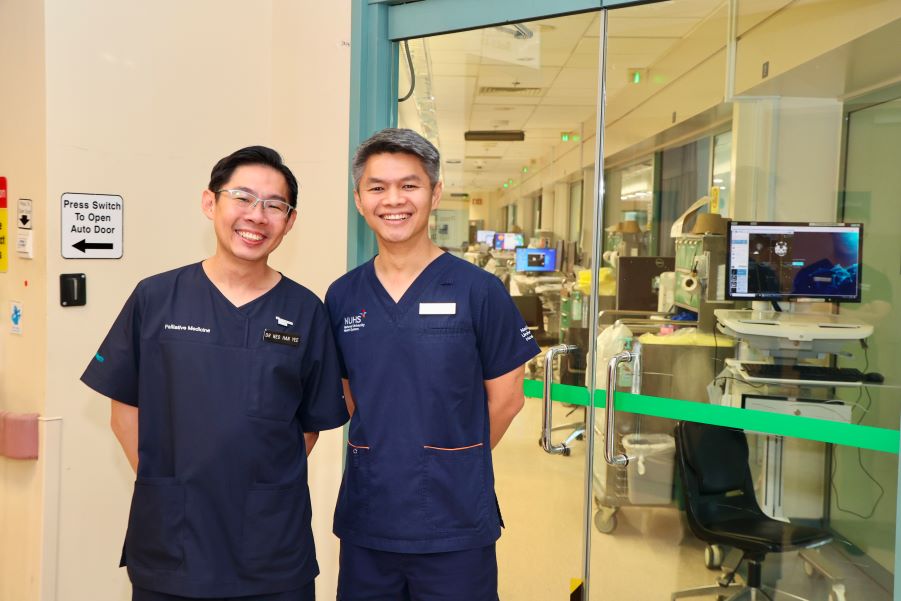
NUH, together with Tan Tock Seng Hospital and supported by the Lien Foundation, recently launched A Kinder ICU — a four-year programme that embeds palliative care into routine ICU practice from the point of admission. Rather than reserving palliative support for end-of-life scenarios, it runs alongside life-sustaining treatment from the outset, reaching patients earlier in their care journey. Over the next four years, the programme is expected to benefit thousands of ICU patients at NUH.
Earlier, patient-centred intervention
A Kinder ICU is underpinned by a structured framework that prompts clinical teams to identify palliative care needs early. All ICU patients are assessed for symptoms such as pain, breathlessness, and confusion, with particular attention to those who are unable to communicate.
In the pipeline is a palliative care referral checklist, embedded in the electronic medical record system, which prompts ICU doctors to consider specialist palliative medicine referrals within 72 hours of admission, ensuring that symptom management and patient-centred decision-making happen alongside intensive treatment rather than after it.
Within 48 hours of admission, ICU nurses engage caregivers to understand family context and priorities, conducting a psychosocial needs assessment to identify concerns that may affect medical decisions. This assessment is repeated at key junctures, including when a patient’s condition deteriorates.
The programme also introduces art and music therapy into the ICU setting, bringing therapeutic support to the bedside to suitable patients. These are complemented by nurse-led legacy work that helps patients and families create meaningful memories during their time in care.
Care that goes beyond ICU walls
The programme’s impact extends well beyond the ICU itself. For patients who recover, care transitions to the general ward or home are carefully coordinated to maintain continuity. For those whose conditions do not improve, the withdrawal of life-sustaining treatment, when no longer beneficial, is managed with dignity and in accordance with patients’ values and preferences.
“Looking beyond the usual matrices of successful ICU care, this programme also aims to achieve improved symptom control, better psychosocial support and better alignment in goals of care,” says Adj A/Prof Adrian Kee, Head of Division and Senior Consultant, Division of Respiratory & Critical Care Medicine, Department of Medicine.
Nurses leading compassionate care at the bedside
Nurses play a central role in A Kinder ICU. Present around the clock, they have the most sustained contact with critically ill patients. They are also often the first to detect changes that clinical readings alone do not register.
“Because nurses are with ICU patients 24/7, we are often the first to notice subtle, non-verbal signs of distress,” says Ms Charmaine Sim, Advanced Practice Nurse, Medical Intensive Care Unit, NUH. “Through strengthened palliative care training, nurses are better equipped to bring this sensitivity into every shift and translate bedside observations into timely action. This enables us to lead palliative care reviews, initiate difficult conversations with families, and advocate for patients who can no longer speak for themselves.”
NUH will train 400 ICU staff consisting of doctors, nurses, therapists, and social workers over the next four years. A community of up to 30 palliative care nurse champions will mentor and guide ICU nurses in daily practice, supported by Advanced Practice Nurses who lead knowledge sharing and professional development.
NUH had already begun laying the groundwork for this shift, developing a community of Palliative Care Resource Nurses to work alongside intensive care doctors in delivering general palliative care. A Kinder ICU builds on that foundation, extending the scope, formalising the structure, and equipping a broader clinical team with the skills to make palliative support part of everyday ICU practice.
Like this article? Simply subscribe to make sure you don't miss the next issue of EnvisioningHealth!