 Subscribe and ensure you don't miss the next issue!
Singapore is seeing a steady rise in eye health concerns.
Among the most common conditions are dry eye disease and childhood myopia. About 12.3 per cent of Singaporeans experience dry eye disease, which can affect comfort, vision, and daily functioning. At the same time, Singapore is often described as the world’s “myopia capital”. Around 65 per cent of children develop myopia by the age of 12 and up to one in five children have high myopia – a more severe form associated with higher long-term risks.
The National University Hospital (NUH) has introduced two new clinical services aimed at addressing these challenges — one focused on ocular surface and dry eye disease, and the other on slowing myopia progression in children.
Treating dry eye disease beyond eye drops
“Dry eye disease can be a silent but persistent struggle — many people notice blurred or fluctuating vision and discomfort, and assume it is simply a consequence of long hours on screens,” says Dr Chris Lim,Consultant, Department of Ophthalmology, NUH.
Dry eye disease occurs when the eyes do not produce enough tears, or when the tear film becomes unstable. Symptoms range from irritation, burning, and fluctuating vision to light sensitivity and fatigue. When left untreated, chronic inflammation of the ocular surface can interfere with daily activities and reduce quality of life.
NUH’s Dry Eye and Ocular Surface Service has a Dry Eye Procedure Clinic that moves beyond the cycle many patients experience of trying various lubricant drops with partial or short-lived relief. Instead, the clinic focuses on clearer diagnosis and targeted interventions for the underlying causes of each patient’s condition.
Three key procedures address common problems:
1 | Microblepharoexfoliation treats blepharitis (eyelid inflammation) by gently cleaning debris and bacterial buildup along the lash line using a rotating medical-grade micro-sponge. |
2 | Vectored Thermal Pulsation treats meibomian gland dysfunction. It unblocks oil glands in the eyelids by applying controlled heat and pressure, restoring the natural oils that prevent tears from evaporating too quickly. |
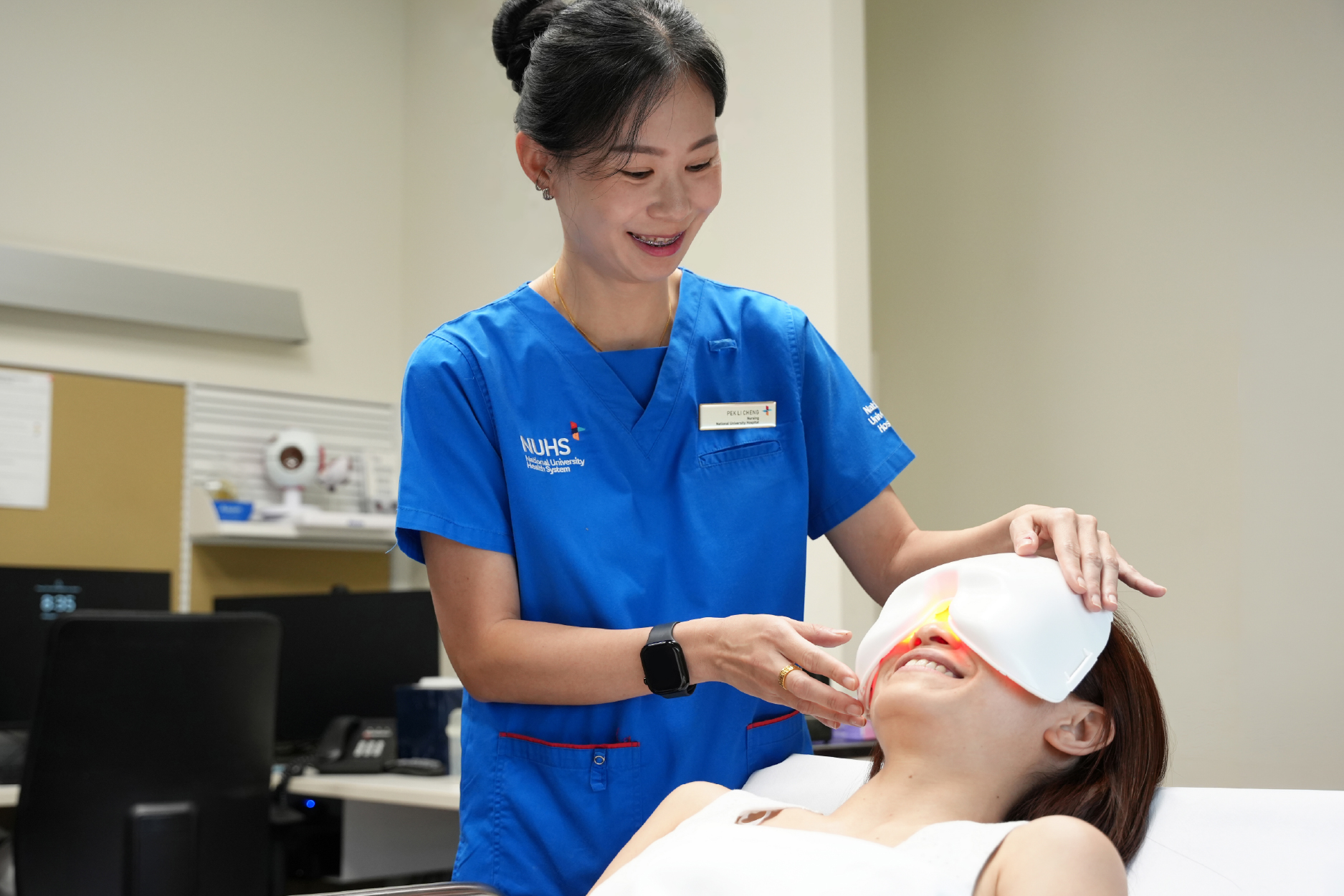
3 | Low Level Light Therapy uses targeted light to stimulate cellular repair and reduce inflammation in the oil glands. |
“A structured approach allows us to identify the underlying drivers more precisely and intervene earlier, rather than relying solely on symptomatic relief,” adds Dr Lim.
The service is also pioneering a nurse-led workflow, with specially trained nurses supporting evaluation, patient education, and selected procedures under established protocols and consultant oversight.
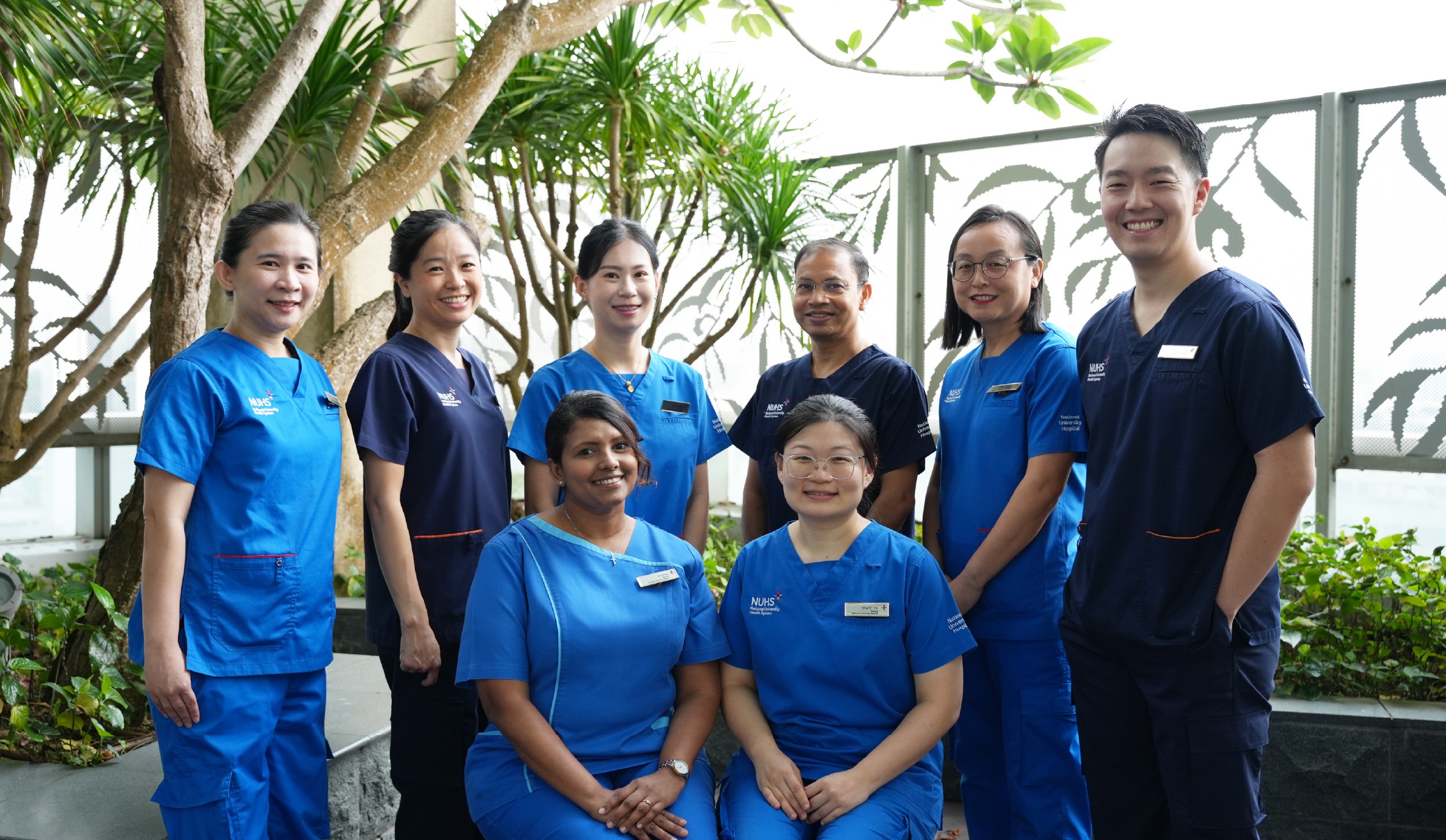
“This approach helps patients maintain proper eyelid hygiene and provides ongoing support for a condition that needs long-term management. It also frees up specialists to focus on more complex cases,” adds Associate Professor Ray Manotosh, Senior Consultant, Department of Ophthalmology, NUH.
Slowing myopia progression in children
Myopia, or short-sightedness, develops when the eye grows too long from front to back, causing distant objects to appear blurred. While mild myopia can be corrected with spectacles or contact lenses, high myopia significantly increases the risk of early cataracts, glaucoma, retinal detachment, and myopic macular degeneration later in life.
NUH now treats children with progressive myopia using soft daily disposable myopia control contact lenses. Unlike conventional lenses that correct vision alone, these lenses slow eye elongation by altering how light focuses on the retina, reducing further myopia progression.
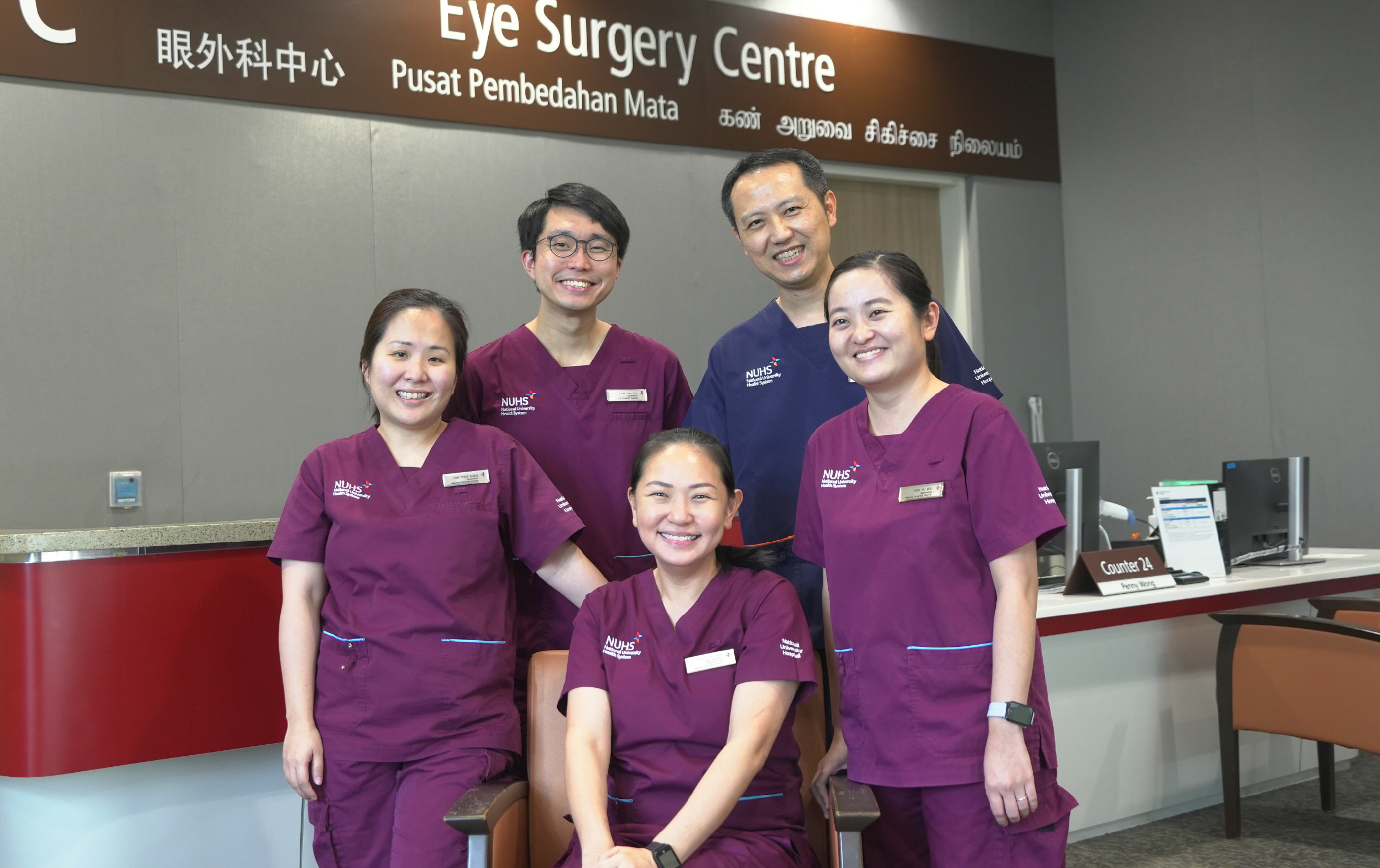
Clinical studies show that these lenses can reduce myopia progression and axial eye growth over several years, with sustained effects even after treatment ends. The lenses are part of a broader myopia management plan which may include low-dose atropine eye drops — a medication that slows myopia progression by reducing excessive eye growth in children — where clinically appropriate.
Two recent paediatric cases illustrate the treatment approach. An 11-year-old girl whose myopia worsened despite atropine drops switched to the daily disposable myopia control lenses. She achieved stable vision with good tolerance. Another child had very different prescriptions in each eye — the clinic fitted a myopia control lens in the more affected eye, which improved visual comfort and slowed progression.
“Since launching the service, we’ve seen encouraging results — children’s myopia progression has slowed significantly compared to before treatment,” says Dr Sun Chen-Hsin, Consultant, Department of Ophthalmology, NUH. “These lenses give us another option for children whose myopia continues to progress despite standard measures.”
Together with the dry eye treatments, these services reflect NUH’s step forward in tackling Singapore’s evolving eye-health challenges — providing advanced interventions and expanded treatment options that can preserve vision for years to come.
Like this article? Simply subscribe to make sure you don't miss the next issue of EnvisioningHealth!