 Subscribe and ensure you don't miss the next issue!
Through the night in a surgical ward, a nurse wheels a monitor from bed to bed, wrapping a cuff around each sleeping patient’s arm and waiting for the reading. These routine checks are crucial, as a change in blood pressure or pulse is often the first warning that something is amiss. However, each check means waking the patient, and the repeated interruptions can disrupt recovery.
A pilot at the National University Hospital (NUH) points to a less intrusive way of observation. Thirty patients recovering from general surgery wore a smartwatch that tracked their vital signs continuously while nurses kept up their usual rounds. Based on the positive results, NUH is exploring the feasibility of expanding the programme to enable automated vital-signs monitoring in up to 10 per cent of inpatients over the coming year.
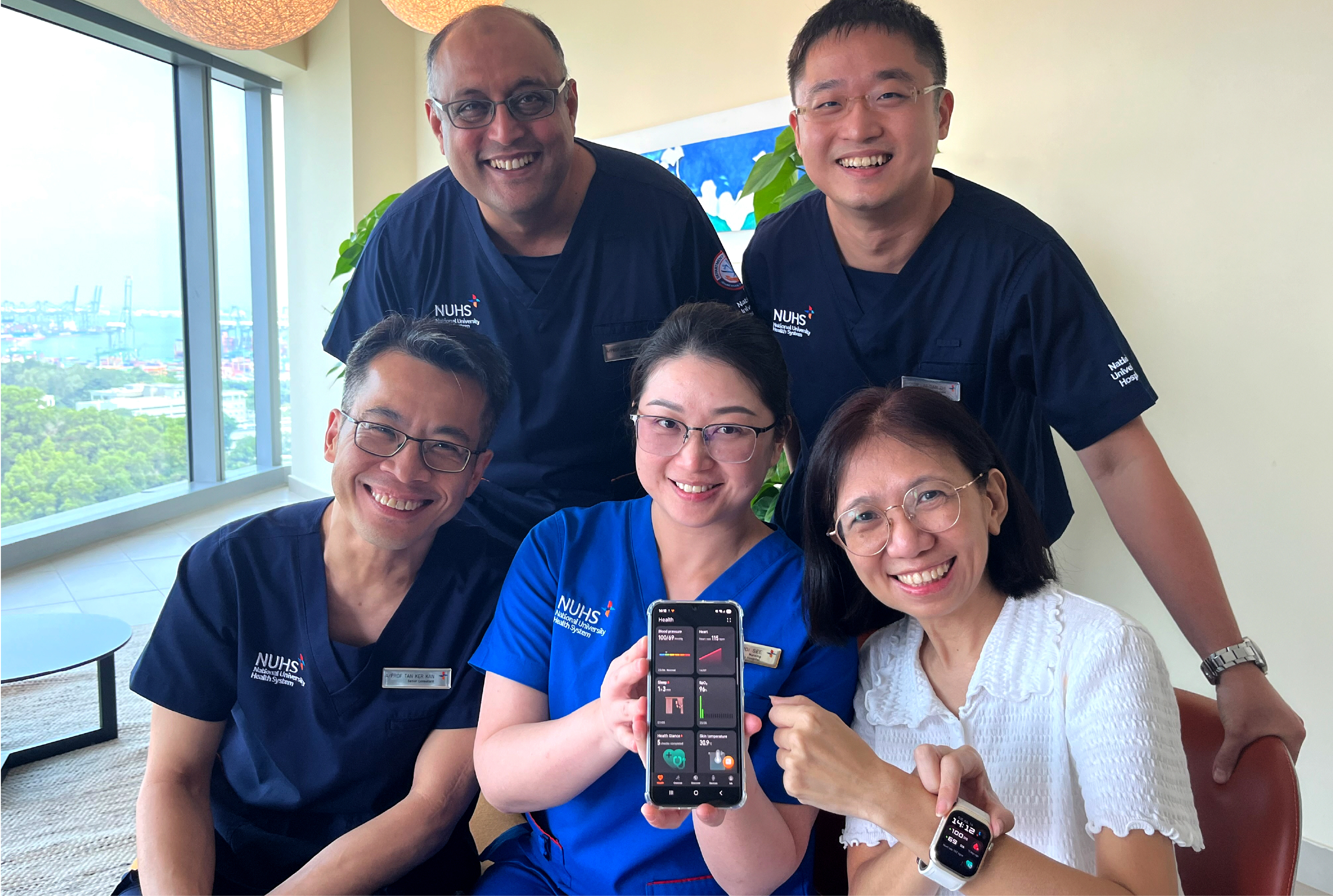
The pilot, which concluded in June 2026, was led by the Department of Surgery, working with surgical ward nurses, operations staff, and researchers from the NUS Yong Loo Lin School of Medicine. The project team comprised Associate Professor Tan Ker Kan, Senior Consultant, Adjunct Assistant Professor Lee Kai Yin, Consultant, and Dr Lim Tian Zhi, Associate Consultant, from the Department of Surgery at NUH.
Spotting abnormalities up to two hours sooner
Immediately after a procedure, a patient’s vital signs are checked as often as every hour. “These vital signs help us assess the patient to see whether they are recovering on the normal track or showing early signs of deterioration,” says Dr Lim.
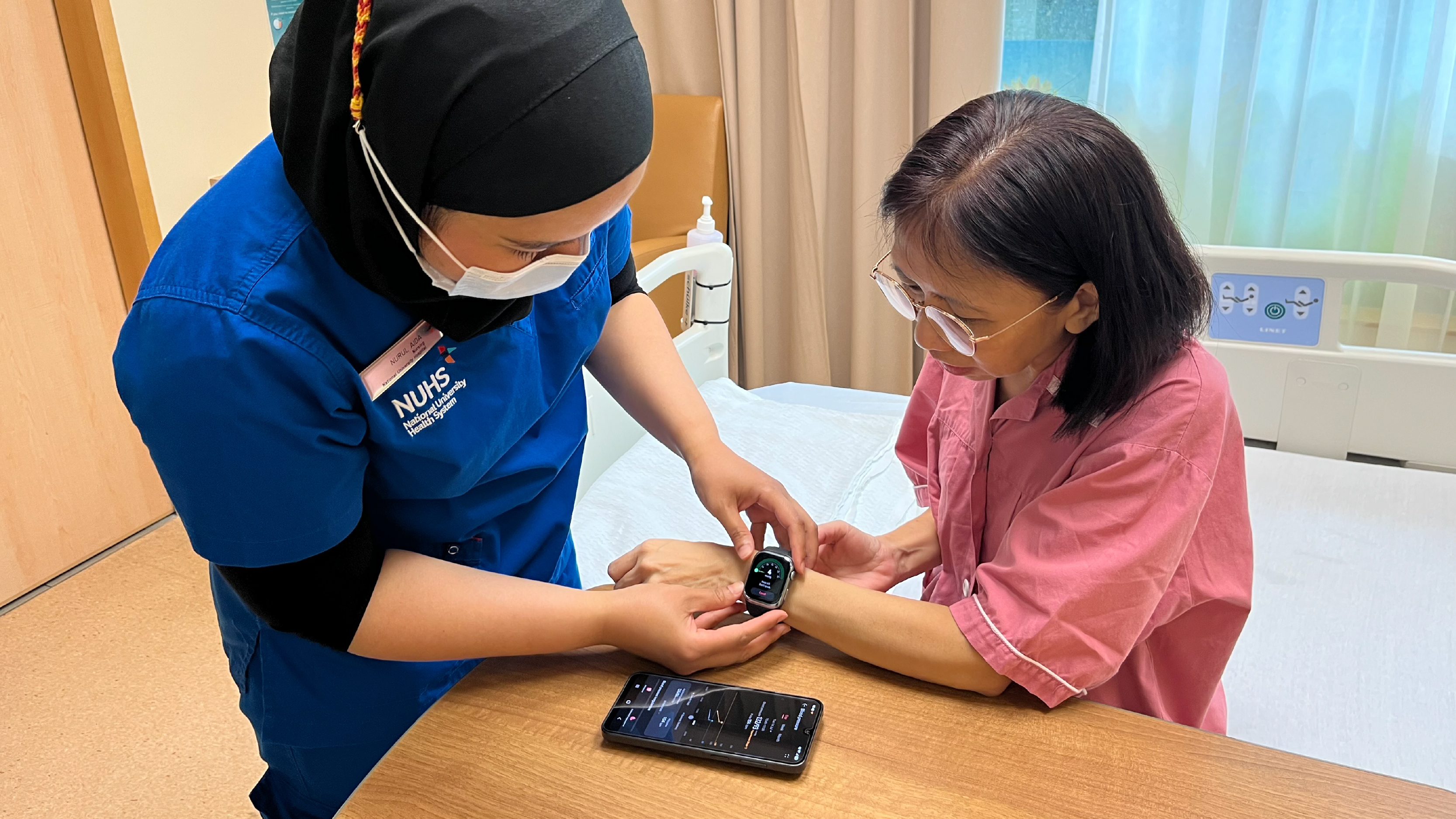
Participants wore a smartwatch with vital signs monitoring capabilities approved by the Health Sciences Authority, measuring blood pressure every 30 minutes and pulse rate and blood oxygen saturation every 10 minutes. The device had earlier been validated against standard hospital equipment in about 180 low-risk patients, with its readings falling within international accuracy standards. Nurses continued their routine bedside checks throughout the pilot, recording the smartwatch readings at the usual hourly or four-hourly intervals and confirming any abnormal reading with standard equipment before escalating care.
Over the month, the watches logged 6,615 vital signs readings, more than five times the 1,211 recorded through routine checks. That coverage translated into earlier warnings: the smartwatch identified 18 abnormal episodes before routine observations did, in some cases up to two hours sooner. Nurses reviewed each episode promptly under existing escalation protocols, and ultimately, none progressed to clinical deterioration and no critical events were missed.
Resting through the night
The pilot also compared how well patients slept. Those wearing the smartwatch and a group of 30 under conventional monitoring both woke about three times a night on average, but for different reasons. Only two of the 30 smartwatch patients said routine vital signs checks had woken them, compared with five of 30 under conventional monitoring.
Mdm Ho Mei Guat, 50, was warded at NUH in June after surgery to remove a tumour from her colon. Her last hospital stay, a decade earlier for a fractured ankle, had meant being woken every hour for checks. The experience this time was markedly different. “I wasn’t being woken up every hour by the nurses,” she says. Wearing a single device on the wrist also felt less intimidating, she adds, than being hooked up to several machines at the bedside.
More time for personalised care
Vital signs monitoring is among the most frequently performed nursing tasks at the hospital, with each manual check taking about two minutes, including documentation. NUH now plans to feed smartwatch data directly into its electronic medical record system so that observations are documented automatically.
“By replacing conventional monitoring with a wearable device, patients can move more comfortably with fewer attachments, supporting early mobilisation during recovery,” says Nurse Manager Lim Pooi See. “At the same time, nurses can devote more time to patients who require closer observation and more direct, personalised care.” Doing away with shared bedside monitors, she adds, also lowers the risk of cross-infection between patients.
“This pilot shows how technology can strengthen, rather than replace, clinical care,” says Associate Professor Asim Shabbir, Head and Senior Consultant, Department of Surgery, NUH. “The encouraging results have given us confidence to explore wider implementation across suitable patient groups. As we expand the programme, patient safety will remain our top priority, and we will continue to evaluate the clinical context and suitability of the technology in different care settings, where it can deliver the greatest benefits.”
Like this article? Simply subscribe to make sure you don't miss the next issue of EnvisioningHealth!