Bronchiolitis (Children)
2026/06/26
Bronchiolitis is a disorder commonly caused by viral lower respiratory tract infection in infants. It is the most common cause of hospitalisation among infants during the first 12 months of life. The diagnosis is made clinically. The disease is usually self-limiting, and treatment in hospital is mainly based around supportive care with oxygen and hydration.
Despite established guidelines internationally based on good evidence for supportive care in the management of bronchiolitis, there is still significant variation in practice between physicians in managing infants with bronchiolitis, with overuse of interventions that have been shown to make little or no difference in disease outcome.
We have observed a steady increase in case volume over the years. In 2023, there were 361 patients admitted with bronchiolitis, rising to 486 in 2024 and 657 in 2025. Quality was measured using a combination of clinical quality and safety outcomes with appropriateness of care measures. The graph below depicts the compliance rate for each of the 8 quality indicators, where a higher percentage reflects a better result.
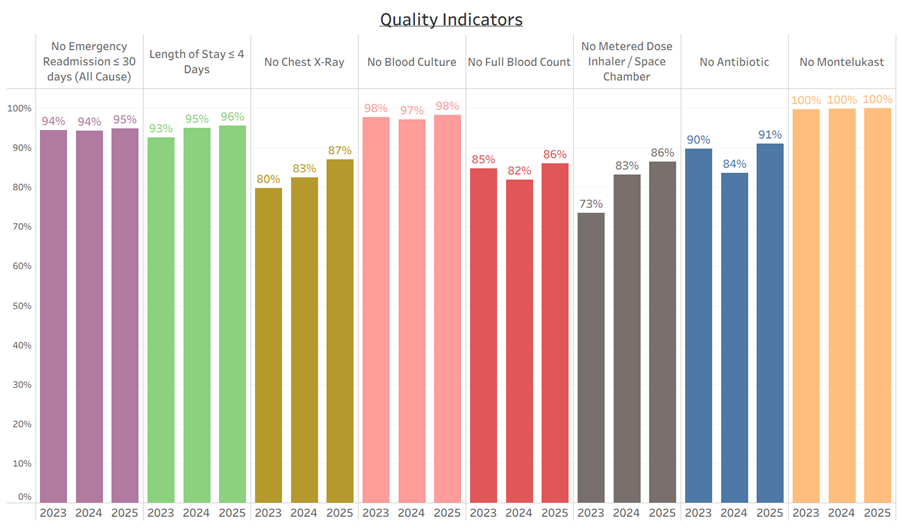
The readmission rate for bronchiolitis has remained low and stable over the past three years, consistently averaging approximately 5%. More than 90% of patients had a length of stay of fewer than four days, with a median length of stay of two days sustained across all three years. Notable reductions were observed in the proportion of patients receiving chest X-rays and metered-dose inhalers with spacer chambers, declining by 7% and 13% respectively over the same period. No significant change was identified in the proportion of patients who received blood cultures or full blood counts. Encouragingly, Montelukast was not prescribed to any patient throughout the entire three-year period. Although the proportion of patients receiving antibiotics rose to 16% in 2024, this was promptly addressed and reduced to 9% in 2025.
An evidence-based approach combining stakeholder engagement, education, and data transparency can lead to decreased variation in practice amongst clinicians in managing bronchiolitis without recourse to unnecessary use of inappropriate treatments or prolonging the length of stay. This will help to reduce the health economic burden of this common childhood condition.