Improving Recycling and Reducing Waste
2026/02/04
Boosting waste recycling through Sort-at-Source
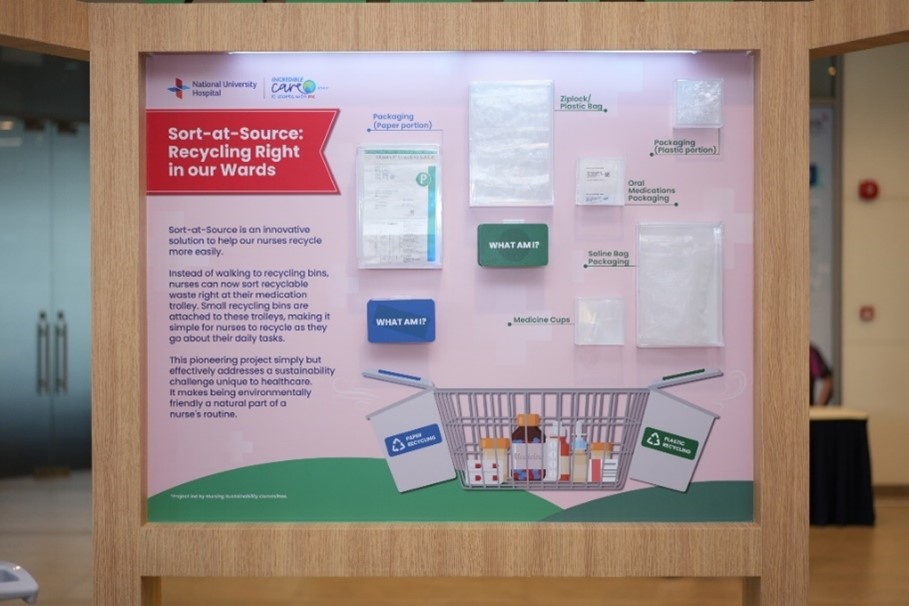
We innovated Sort-At-Source to enable our nurses to recycle more easily.
Instead of walking to central recycling bins, nurses now sort paper and plastic waste directly on their medication trolleys using small attached recycling bins. This integrates recycling seamlessly into their daily routines.
With encouraging trial results showing a 47% increase in paper recycling and an over 230% increase in plastic recycling, we are progressively deploying this across all NUH wards by end-2025. This initiative will recover close to 24,000 kg of recyclable waste annually.
Watch the video below to learn more!
We moved towards a plastic-lite campus by:
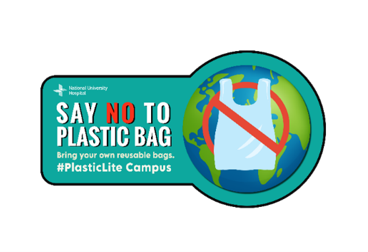
- Phasing out small plastic bags at all pharmacies, cutting plastic use by over 50%
- Partnering with retail tenants to reduce plastic bag use and encourage customers to bring their own reusable bags
- Ceasing plastic bag provision for staff deskside bins, saving approximately 200,000 plastic bags annually
Digitalising to curb paper waste
Eliminating paper bills
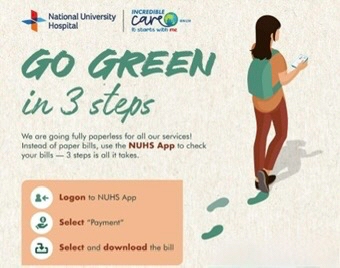
We stopped issuing paper bills for all our services, transitioning to the NUHS app, where patients can conveniently access their bills anytime, anywhere.
Going paperless for medical report requests
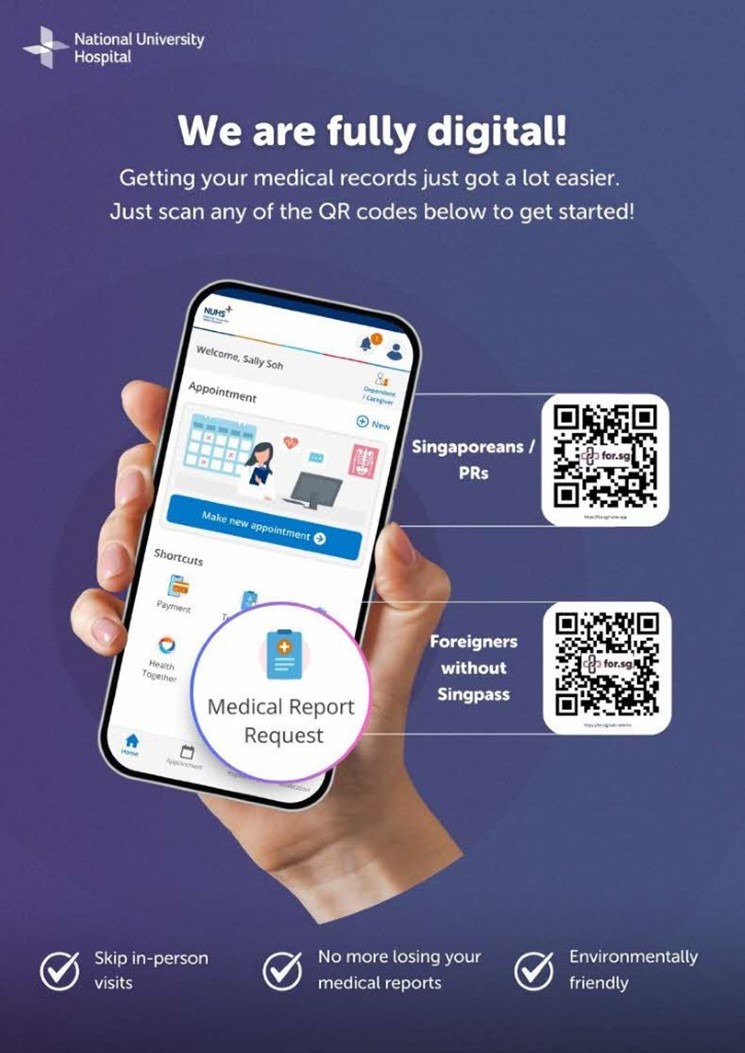
Requests for medical reports are now fully paperless. Patients, insurance companies, and lawyers now submit requests online, with staff processing them entirely digitally. We protect all information with passwords to secure patient data.
This initiative saves over 166,000 pieces of A4 paper, equivalent to 20 trees annually, and cuts approximately 833 kg of carbon dioxide emissions.
Installing food waste digestors in our kitchens
Since 2023, we have been separating food waste from general waste in our kitchens. The food waste is deposited into a digestor, which uses enzymes to break it down, reducing the load sent to landfills.
The digestor processes up to 20,000kg of food waste monthly, cutting our monthly food waste generation from 21,000kg to 15,000kg. This reduces landfill burden and supports our sustainability goals.
We have also extended digestor use to our food court operator, engaging our tenants in this green initiative.
Giving out smaller meal portions in hospital wards
Since 2024, we have reduced the default rice serving size from 180g to 150g per meal for patients without special dietary needs, following consultation with dietitians. Patients can request additional rice if needed.
This initiative has cut rice waste by almost 2,000kg annually, avoiding 2,700kg of carbon dioxide emissions, without compromising patients' nutritional needs.
It has since been implemented across other NUHS institutions, reinforcing our commitment to sustainability in patient care.
Offering flexibility for patients to opt out of hospital meals
Since 2024, we have implemented a campus-wide initiative in partnership with nurses and dietitians, allowing patients to opt out of hospital meals if they prefer to bring their own food.
This initiative achieved a saving of approximately 600 meals monthly, reducing food waste and supporting sustainability efforts.
Repurposing medical waste
Turning single-use plastics into sustainable roads
Single-use plastics play a vital role in medical settings, where hygiene, safety, and infection control are paramount.
These include plastics from used insulin pens, discarded daily, as well as traditionally non-recyclable plastics from Operating Theatres such as syringes, surgical packaging, and Personal Protective Equipment (PPE).
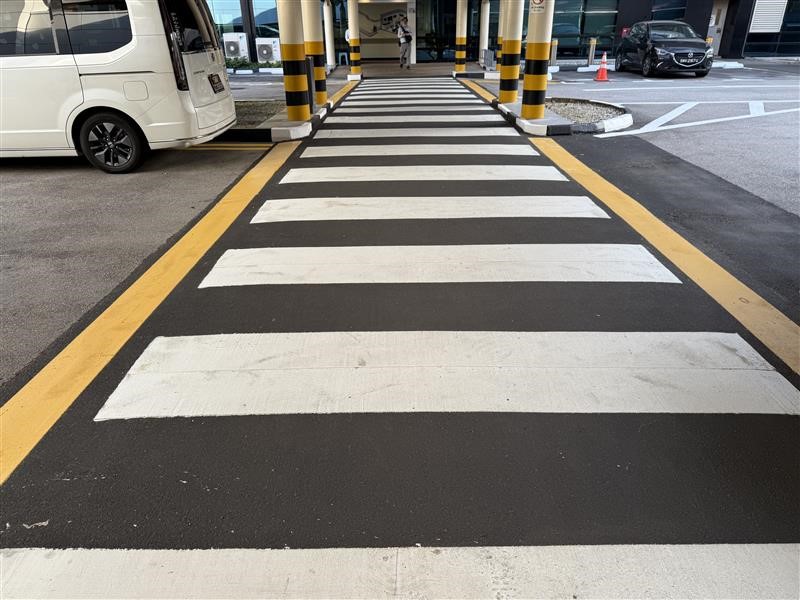
In partnership with a local start-up, these plastics are processed into NEWBitumen, a synthetic material that replaces traditional fossil fuel-derived bitumen and transforms waste into sustainable infrastructure. NEWBitumen has been used to pave one of the pathways linking Main Building and Kent Ridge Wing. Through this pilot project, approximately 405kg of single-use plastics were collected and reprocessed into NEWBitumen.
As the NUH campus undergoes redevelopment, we are committed to greener construction practices and enabling a circular economy within NUH.