A colonoscopy is a procedure that allows doctors to directly view the inside of the large intestine (colon and rectum) using a thin, flexible tube with a camera (endoscope). It is usually performed as a day-surgery procedure by a trained endoscopist — a gastroenterologist or surgeon.
Before the procedure, the colon is cleansed using prescribed bowel preparations such as polyethylene glycol or oral Fleet solutions to ensure a clear view. During the procedure, the doctor can inspect the lining of the colon, take tissue samples for laboratory analysis, and remove pre-cancerous growths (polyps), thereby helping to prevent colorectal cancer.
When should you do a colonoscopy?
Colonoscopy is performed for both screening and diagnostic purposes, such as:
1. Routine colorectal cancer screening (usually from age 50, or earlier in those with a family history of colorectal cancer)
2. Investigation for symptoms such as rectal bleeding or a change in bowel habits
3. Follow-up in those with a history of previous colon polyps or colorectal surgery
Early detection through colonoscopy greatly improves the chances of preventing colorectal cancer or finding it at a curable stage.
Colonoscopy outcomes
1. Exceeding international colonoscopy quality targets
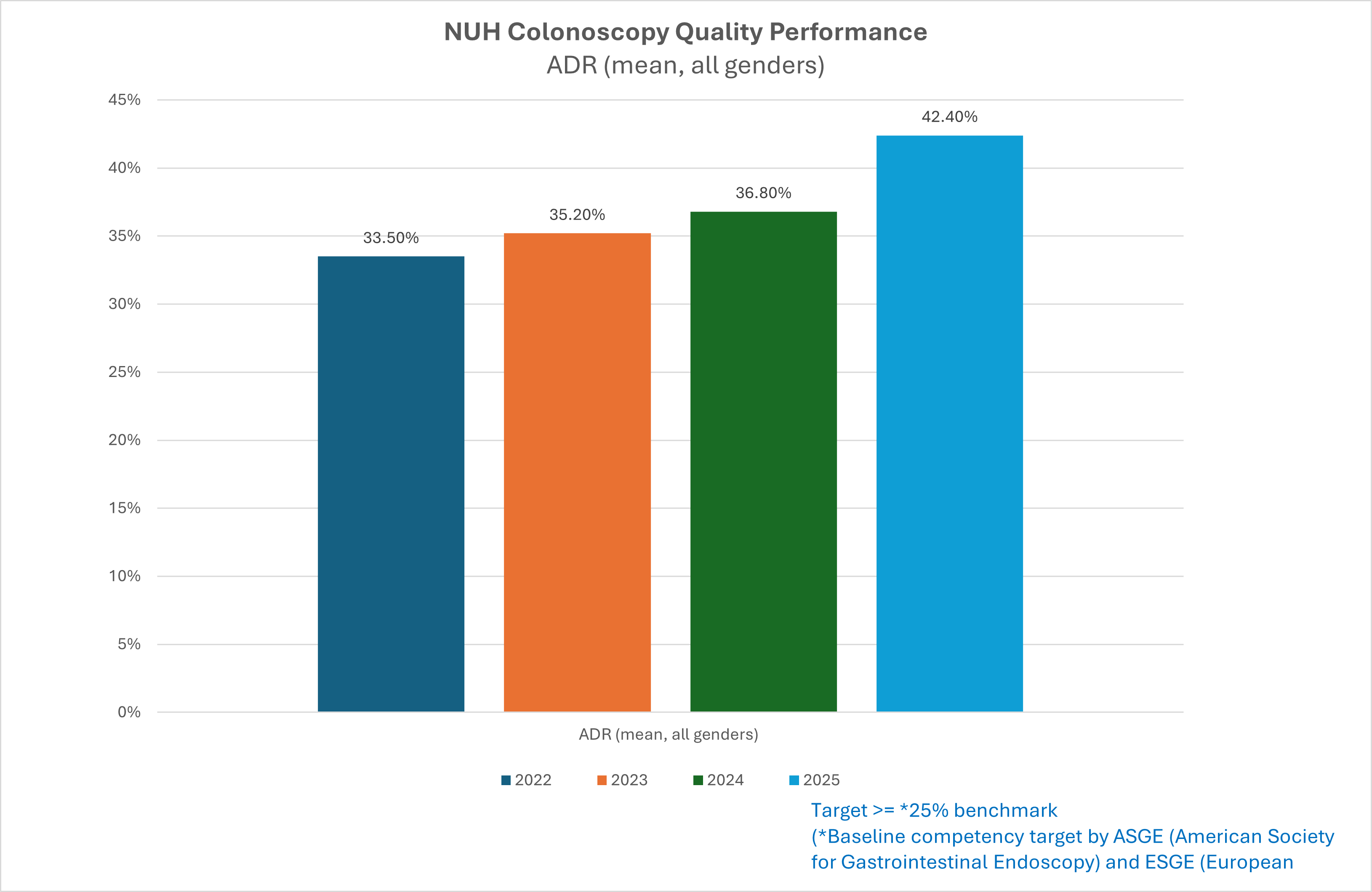
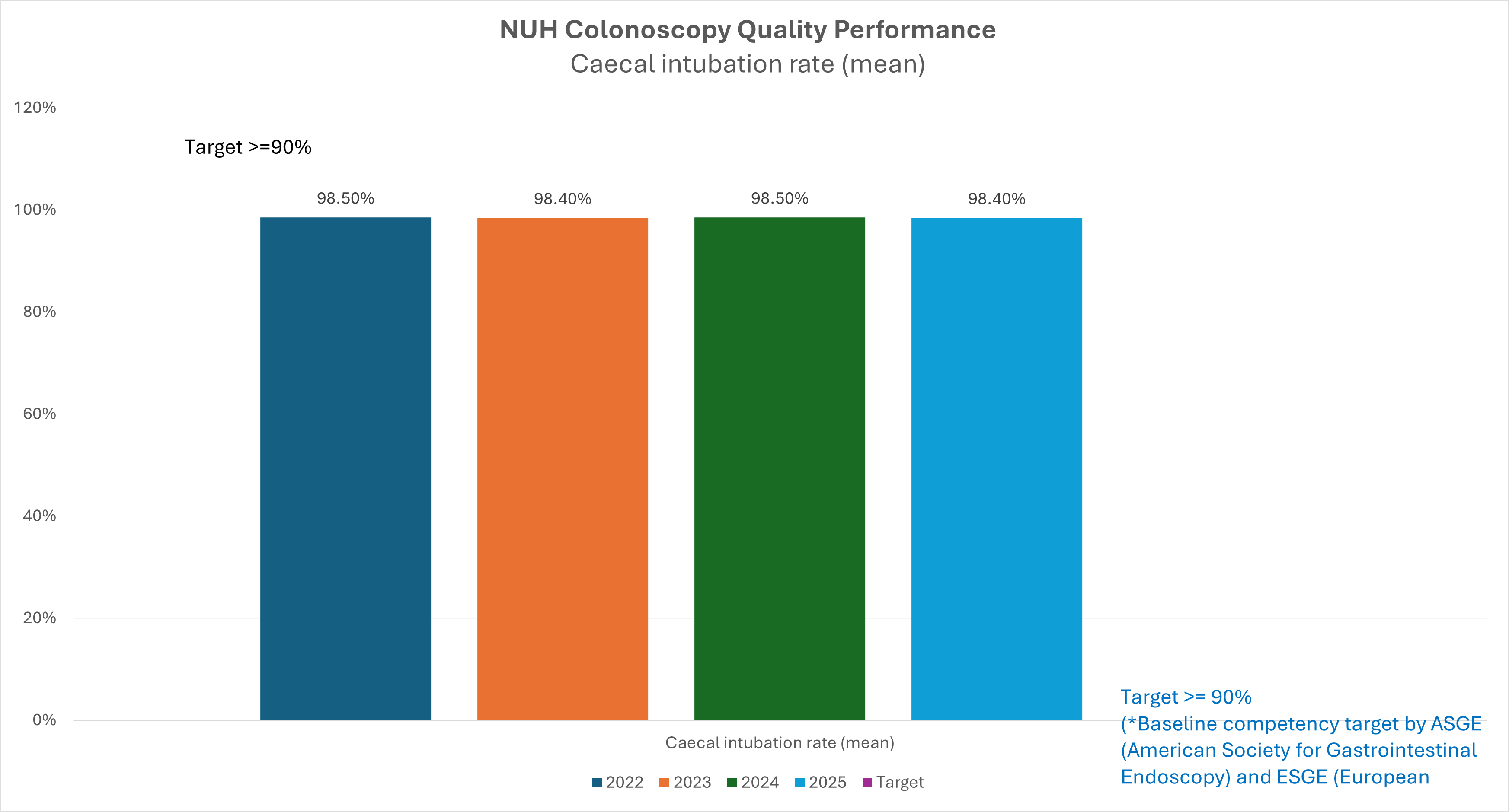
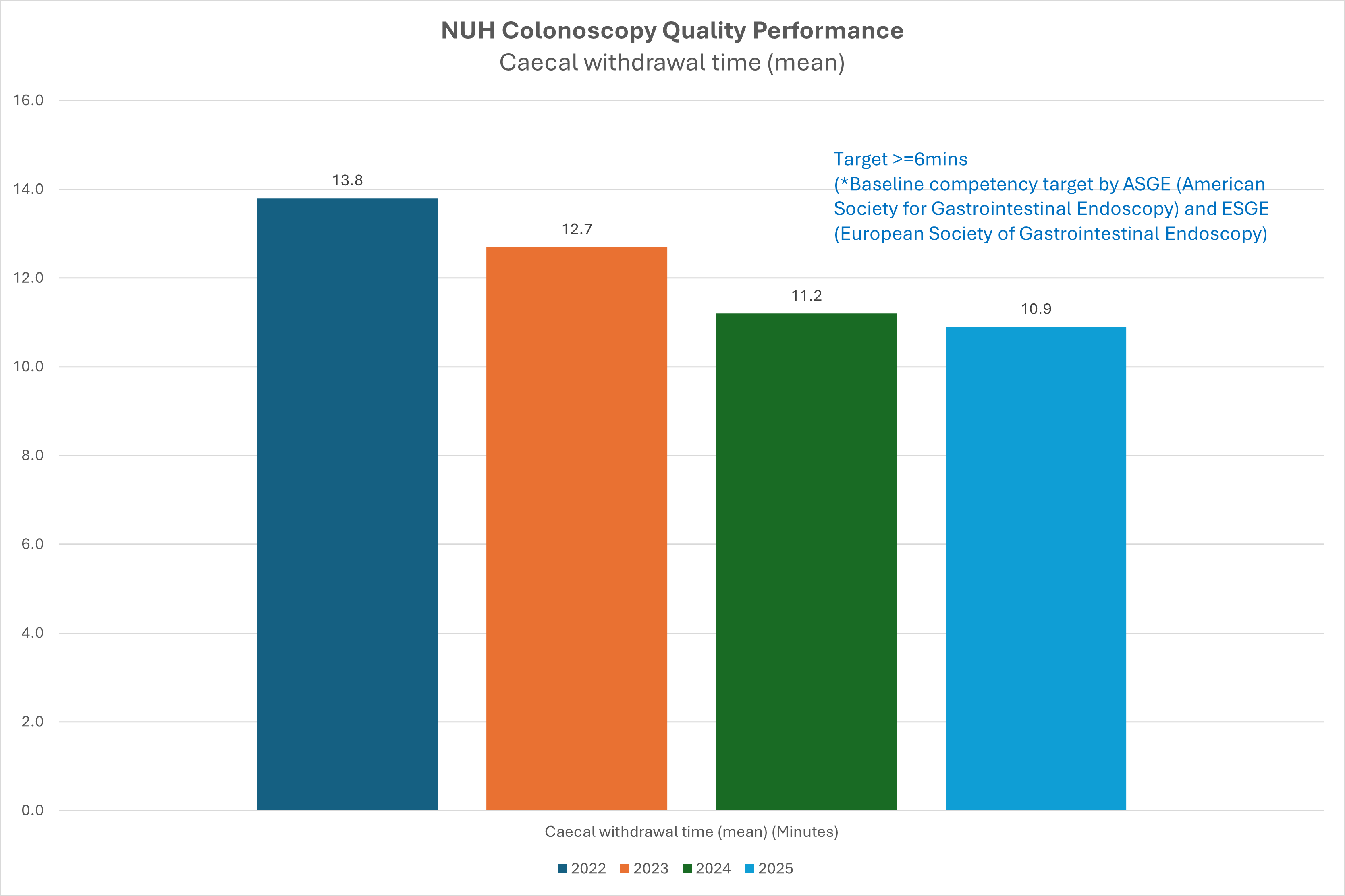
At NUH, we continually track key colonoscopy quality indicators such as adenoma detection rate (ADR), caecal intubation rate, and caecal withdrawal time. These have consistently surpassed all international benchmarks, ie. Baseline competency target by ASGE (American Society for Gastrointestinal Endoscopy) and ESGE (European Society of Gastrointestinal Endoscopy).
Our excellent results reflect our commitment to quality, safety, and excellence in performing colonoscopies for our patients.
2. Advanced endoscopic resection techniques
Beyond standard polyp removal, our centre offers endoscopic mucosal resection (EMR) and endoscopic submucosal dissection (ESD) for larger or more complex polyps, offering minimally invasive alternatives to surgery while ensuring complete and safe removal.
3. Computer-assisted technologies
As one of the early adopters in Singapore, we have integrated the use of artificial intelligence into our daily colonoscopy practice. These systems provide real-time assistance by highlighting subtle polyps during the colonoscopy, serving as a "second observer" and enhancing our detection, diagnosis, and quality control.