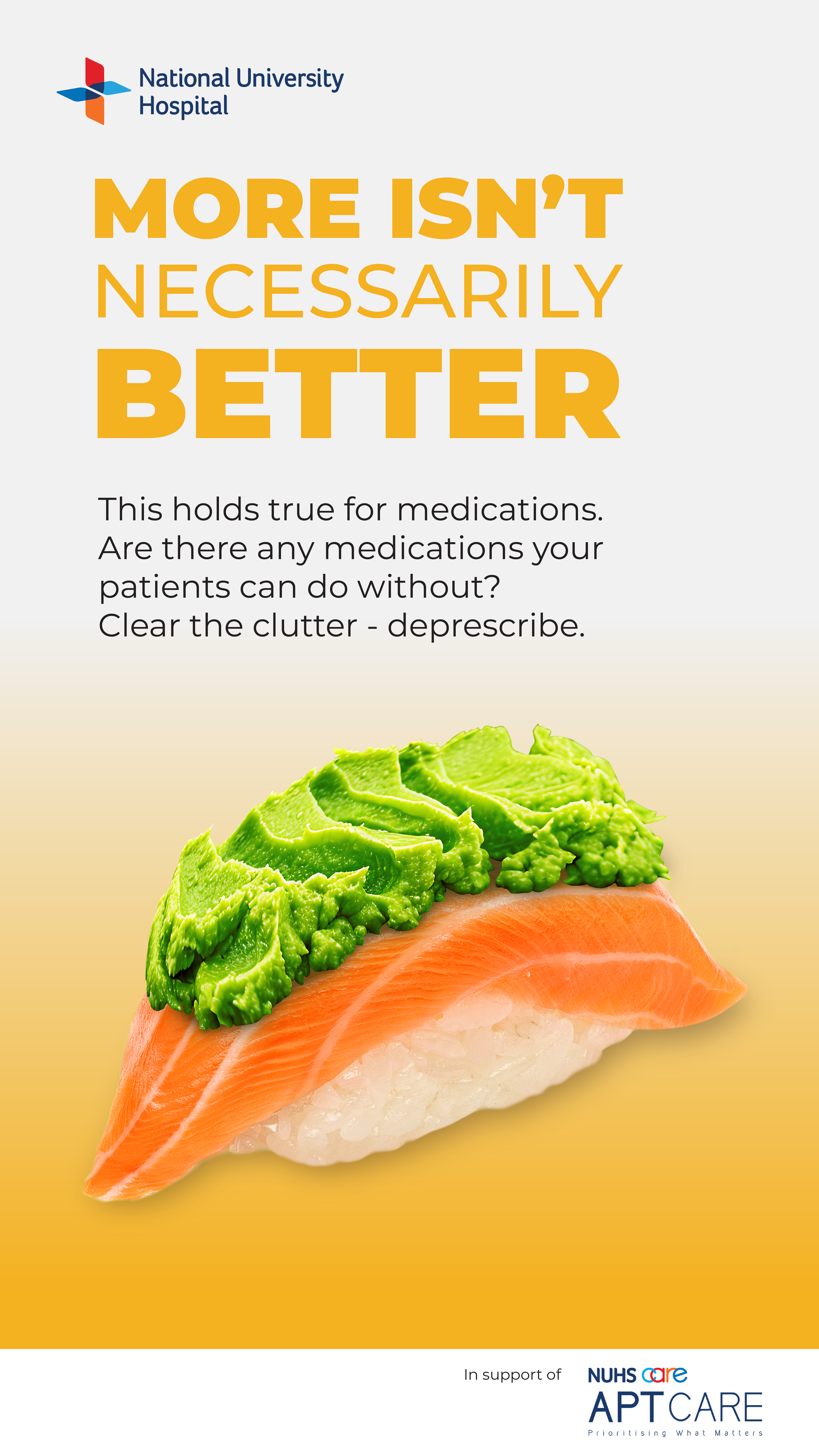
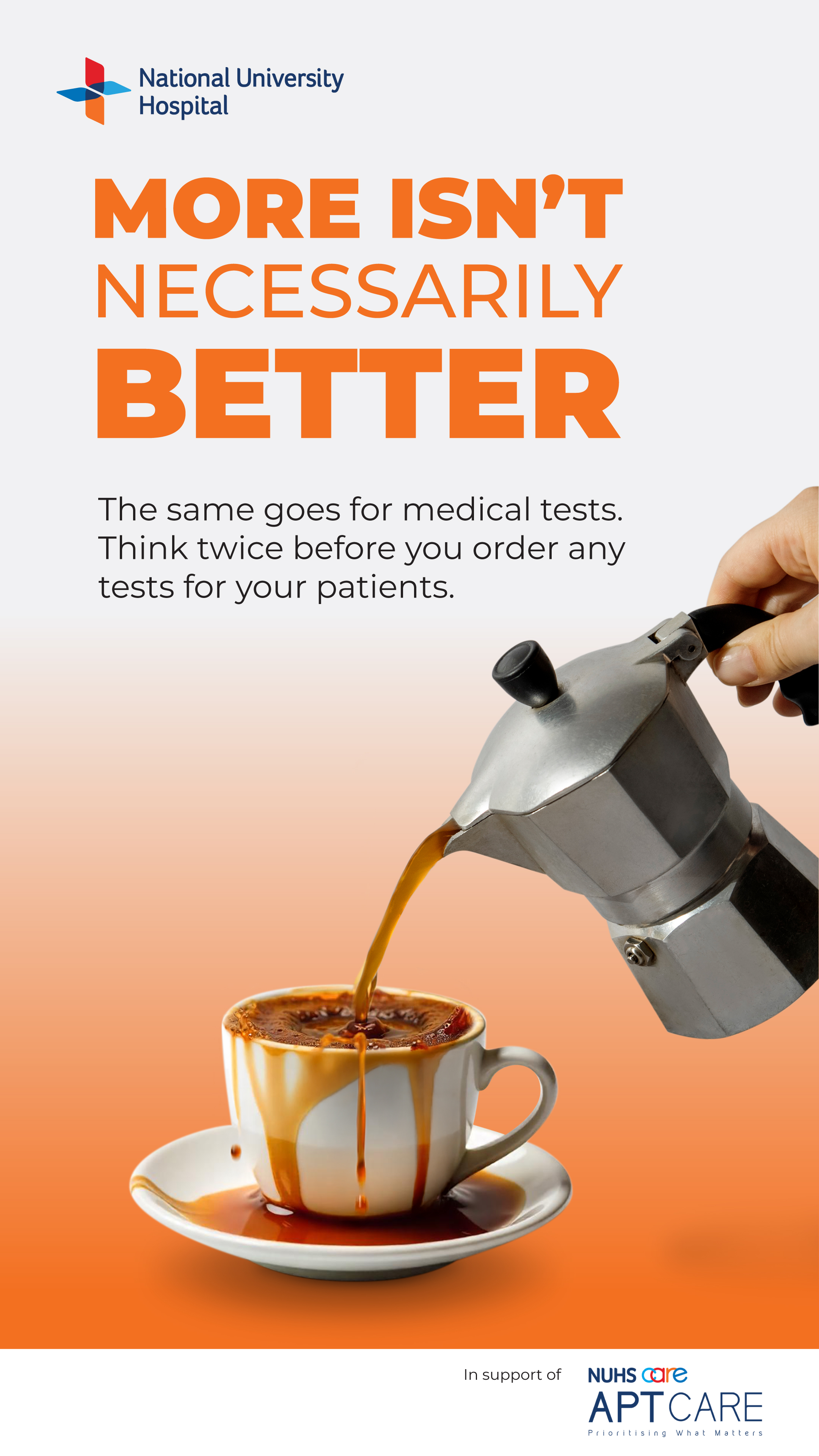
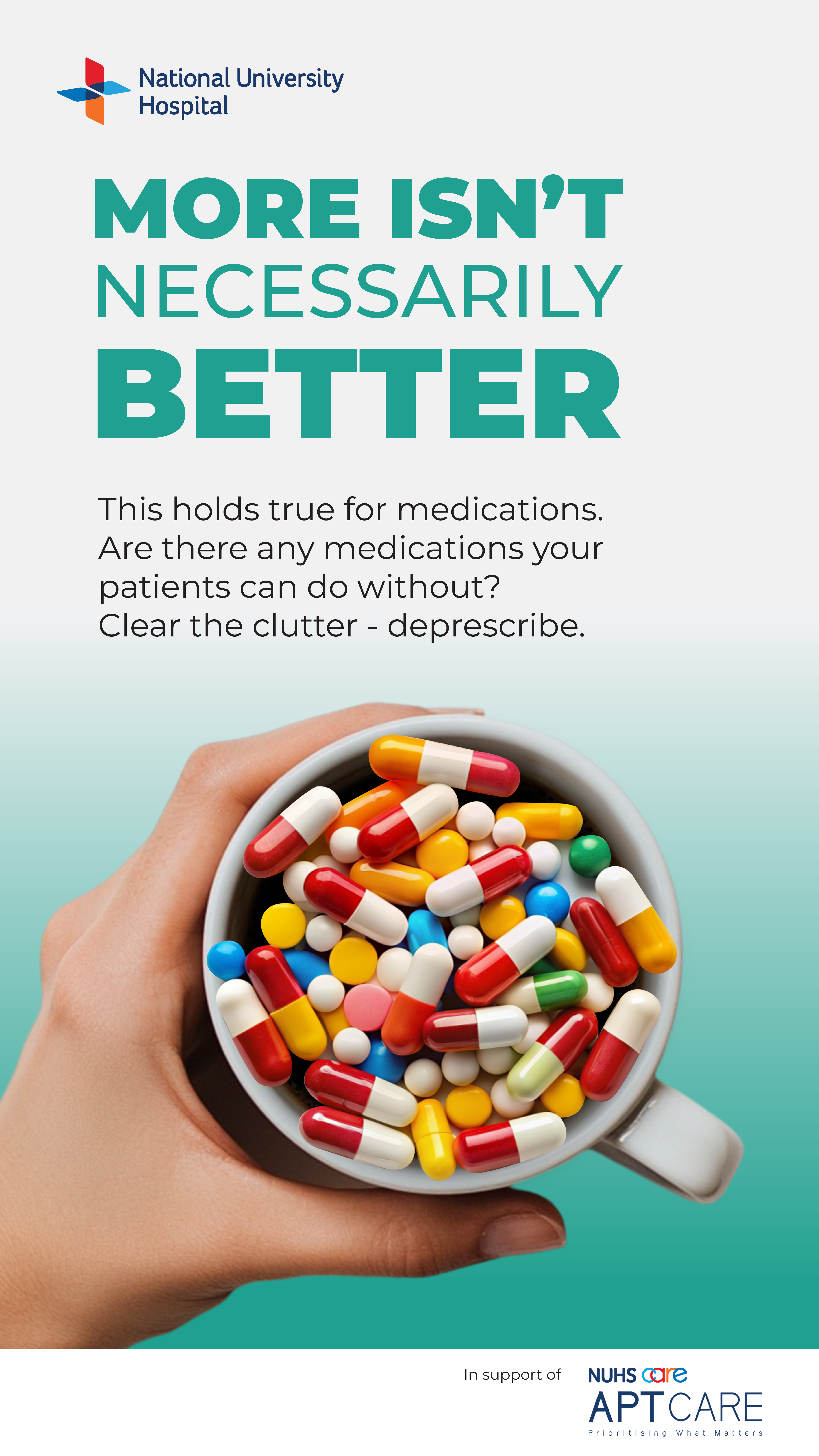
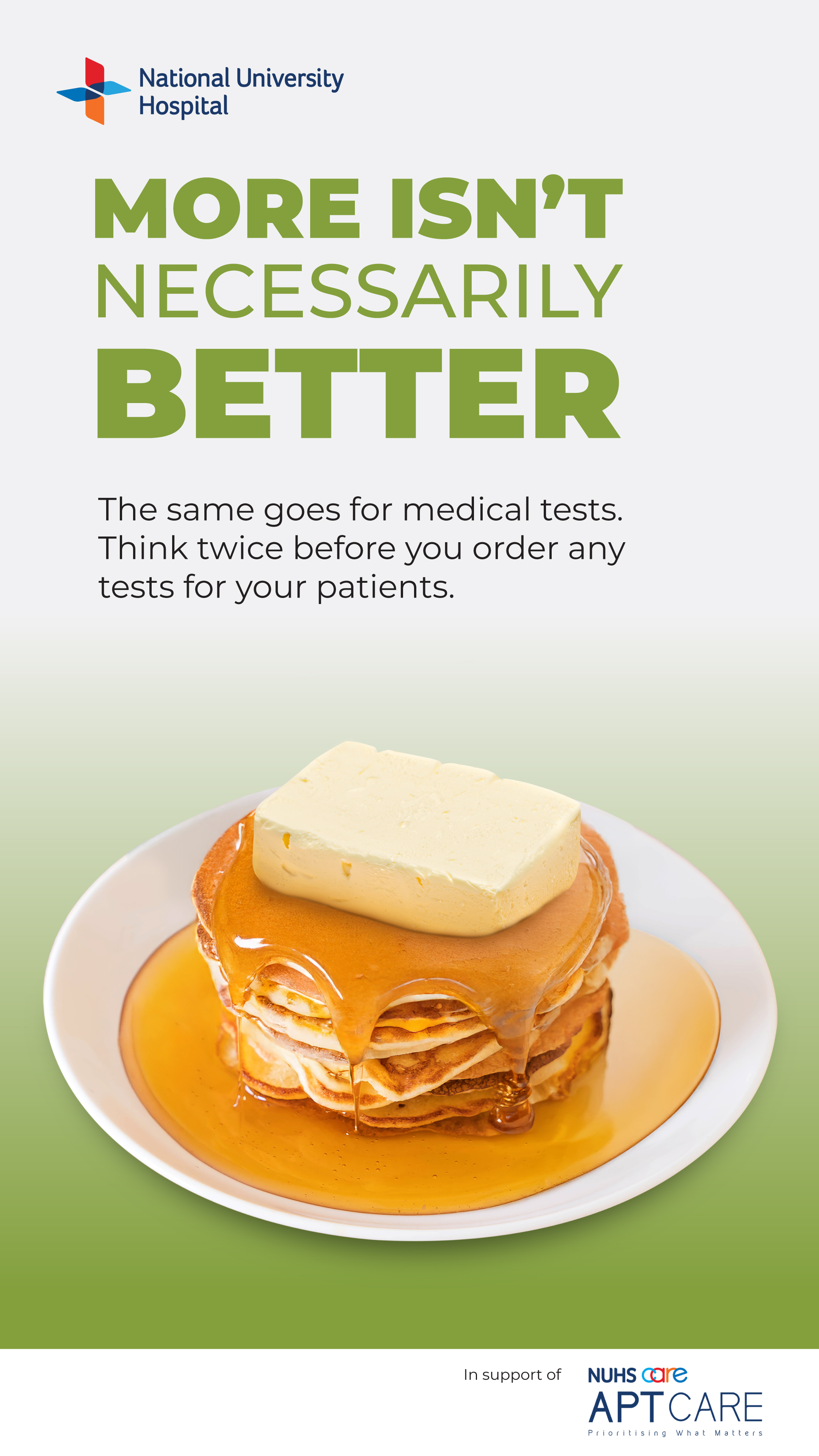
The Appropriate Care (Apt Care) Programme represents our commitment to delivering care that is purposeful, evidence-based, and centred on what truly matters to our patients. Inspired by the global Choosing Wisely movement, Apt Care aims to ensure that every test, treatment, and consultation contributes genuine value—improving outcomes whilst minimising unnecessary interventions and waste.
Our ethos is simple but powerful: more isn't necessarily better. It encourages both clinicians and patients to engage in open, thoughtful conversations about the care that best aligns with patients' goals and clinical needs. This focus on appropriateness helps strengthen trust, enhance patient experience, and ensure responsible stewardship of healthcare resources. We aim to do what is right whilst challenging norms.
Since its launch, Apt Care has been implemented across multiple areas in NUH with encouraging results.
Appropriate Care at End-of-Life (AptEOL)
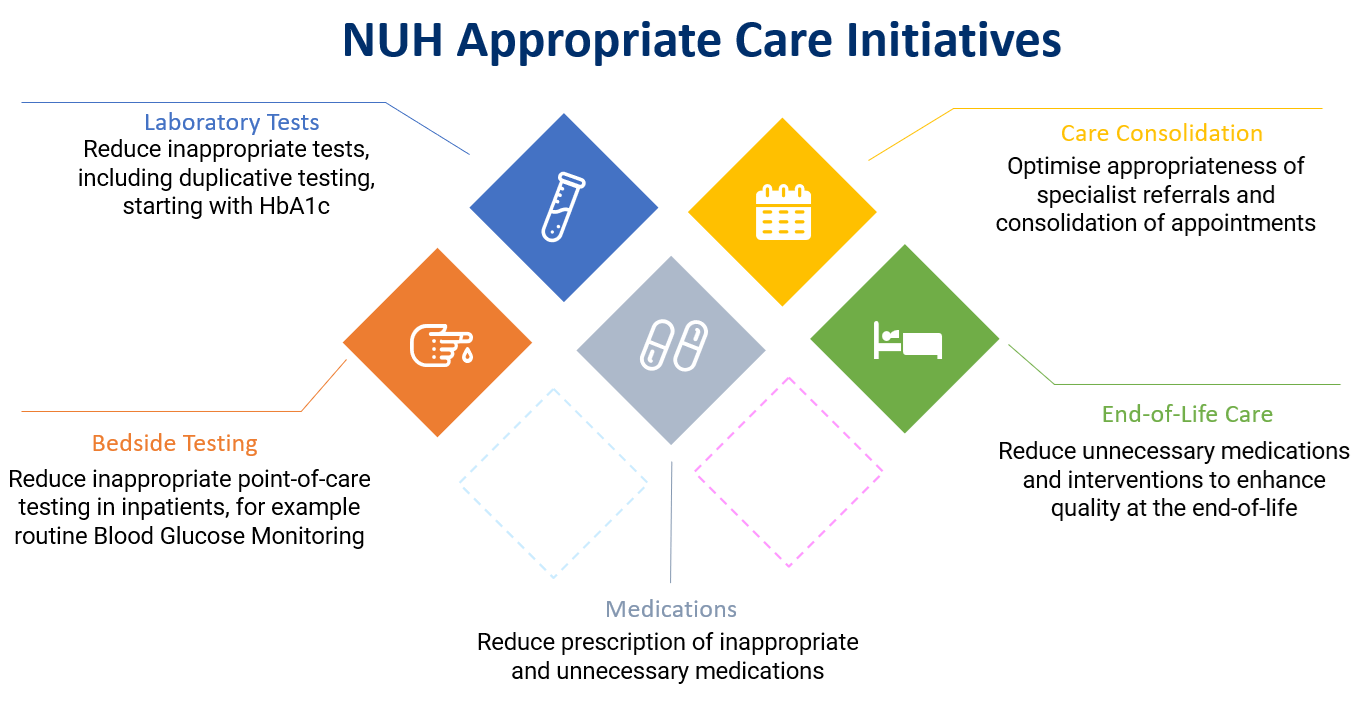
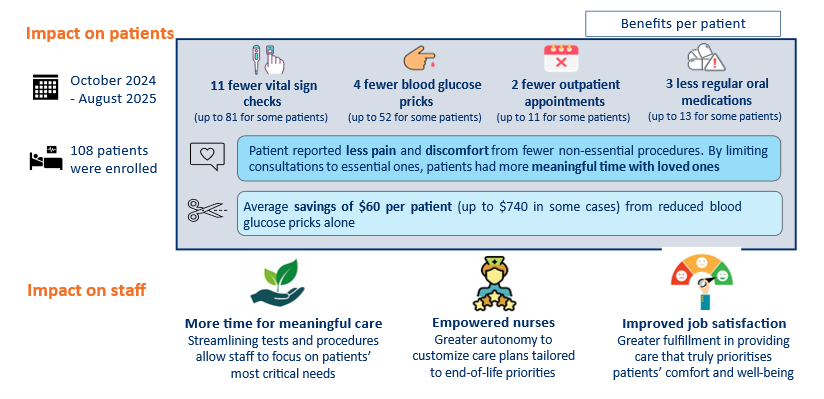
In the End-of-Life Appropriate Care Pathway for patients with advanced cancer, teams successfully reduced non-essential procedures and medications. Patients reported less pain and discomfort, and more meaningful time with family. Nurses shared that this approach empowered them to customise care plans, resulting in higher job satisfaction and improved quality of care.
Appropriate Care: Point-of-Care Blood Glucose Monitoring (POCT BGM)
For our initiative to reduce unnecessary POCT BGM, the new evidence-based workflow led to a significant drop in daily glucose testing without compromising safety. Among 78 nurses surveyed, around 85% expressed confidence in following the new workflow, and 87% felt empowered to reduce unnecessary testing. Patients also benefited—reporting reduced discomfort, fewer needle pricks, and lower out-of-pocket costs.
.png?sfvrsn=b1d6afea_1)
These projects demonstrate that thoughtful, evidence-informed changes can lead to better patient experiences, more meaningful work for healthcare staff, and improved efficiency for the hospital.
Other projects across the hospital include consolidation of medications and medical appointments, reduction of duplicate blood tests, and appropriate follow-up of incidental imaging findings. Using Quality Improvement methodology, staff engagement and empowerment, education of patients and staff, as well as leveraging technology (including the national medical records system, EPIC), we aim to achieve sustainable change.
Apt Care continues to expand its reach, with new initiatives to reduce redundant and duplicated laboratory tests, medication reviews for frail patients, and aligning follow-up schedules to patients' actual clinical needs. Each project shares the same underlying goal—to deliver care that is clinically sound, patient-focused, and sustainable for the long term.
As NUH continues to champion a culture of mindful and meaningful care, the Apt Care Programme stands as a model of how healthcare systems can bridge quality, compassion, and value—ensuring every patient receives care that truly matters.
Apt Care In the News
- The Straits Times Online, NUH initiative benefits cancer patients by reducing non-essential medications and procedures
- CNA Online, NUH puts patients' priorities first through Appropriate Care
- AP News, NUH puts patients’ priorities first through Appropriate Care
- MoneyFM 89.3, NUH puts patients' priorities first through Appropriate Care
- MalayMail, NUH puts patients' priorities first through Appropriate Care
- Lianhe Zaobao, Page 8. 国大医院推“适当医疗” 灵活血糖监测提升患者护理体验 (NUH introduces Appropriate Care, flexible blood glucose monitoring improves patient care experience)
- Lianhe Zaobao Online, 国大医院人性化医疗 从减少验血次数开始 (NUH's patient-centred care begins with reducing blood test frequency)
- 8world, 国大医院改善流程 护士可酌情减少病患血糖检测 (NUH improves processes, nurses reduce patient blood glucose testing)